

🍄 Welcome to the Mycelial Mainframe
Storing Data in Living Organisms.

🍄 AudioDose Alice on Sonic Mushrooms: Listen to Wilding IQ
🎧 Alice podcasts
📘 Alice books
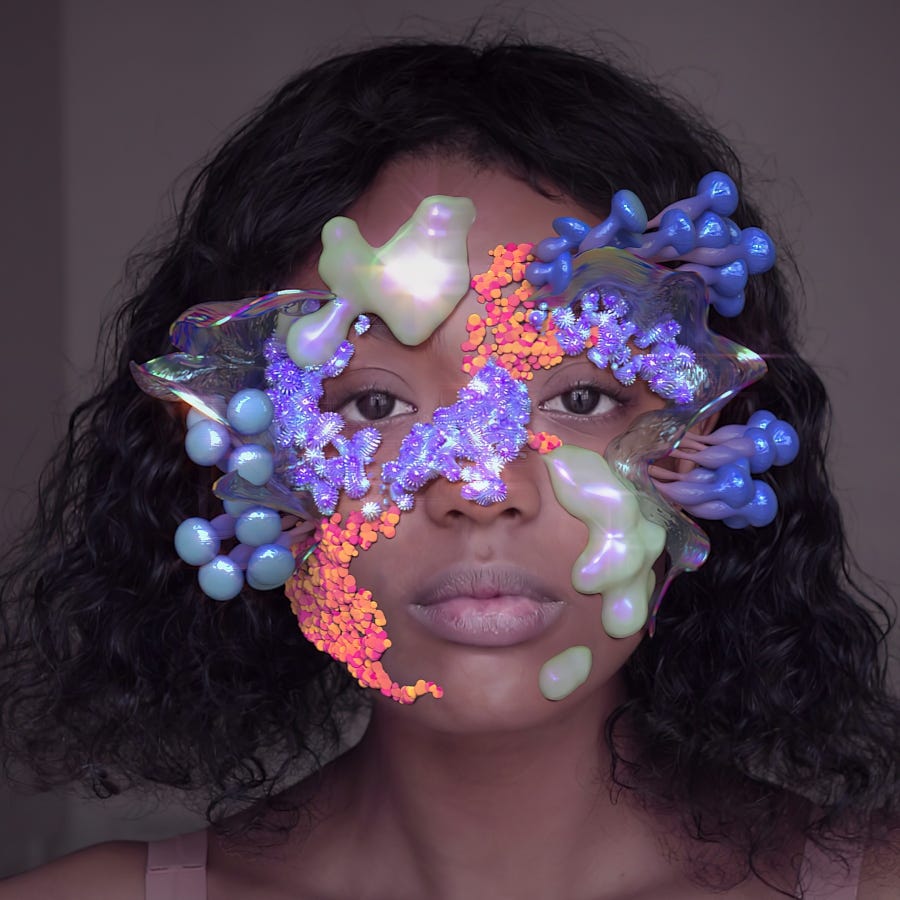
The Opening Gambit: When Tech Merges with Life
Imagine a world where your most treasured memories aren’t stored in silicon but in the roots of an oak tree, encoded not in zeros and ones but in the genetic latticework of living organisms. Data as dendrochronology. Servers that photosynthesize. The cloud, made literal. This isn’t a cyberpunk fever dream—it’s the terrain that Monika Seyfried is exploring through her latest research at the intersection of synthetic biology, data storage, and biomimicry. Hello, we’re Alice and we are always in state of wander.
Seyfried, an interaction designer turned techno-ecological storyteller, has long been fascinated by what happens when technology stops being an external tool and instead becomes an intrinsic part of nature’s own design. From urban data forests to interspecies gossip networks, she doesn’t just anticipate the future—she cultivates it.
Now, with her O’Shaughnessy Ventures Fellowship, she’s assembling a cohort of scientists, hackers, and artists in a bold experiment: storing digital information in living organisms. We caught up with her just as she was gearing up to bring this work to life—literally.
The Fungal Future of Data
An ALICE Interview with Monika Seyfried:
Q: Monika, you’ve been obsessed with alternative data storage for a while now. What’s the spark behind this project?
Monika Seyfried: I’ve always felt that our data infrastructure is fundamentally misaligned with nature. Right now, storing digital information is an extractive industry—our hard drives and data centers run on rare earth minerals, on energy-guzzling server farms. But what if we reintegrated data into nature’s own regenerative cycles?
This is what I’m working on now: Can we encode digital information into living matter? Not a USB stick, but a blade of grass. Not a hard drive, but the mycelial networks beneath our feet. We already know that DNA is the ultimate storage medium—ultra-dense, stable for thousands of years. Why not use it?
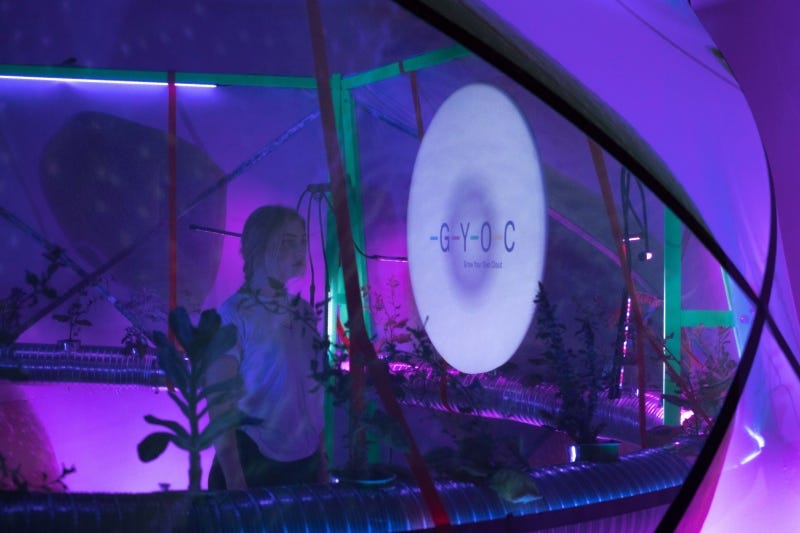
How to Grow Your Own Cloud
Q: This connects to your earlier project, Grow Your Own Cloud, which was a speculative design experiment at first, but now it’s… not so speculative?
Monika: Exactly. We started Grow Your Own Cloud as an artistic provocation, imagining a future where nature itself becomes the internet. We created installations where people could "upload" digital files into DNA sequences embedded in plants, imagining a “green cloud” where information is stored in biological systems rather than steel-and-silicon servers.
Now, the speculative is bleeding into reality. With CRISPR and synthetic biology, we’re seeing the first real-world experiments in DNA data storage. I wanted to move from provocation to prototyping, from concept to working biotechnological proof.
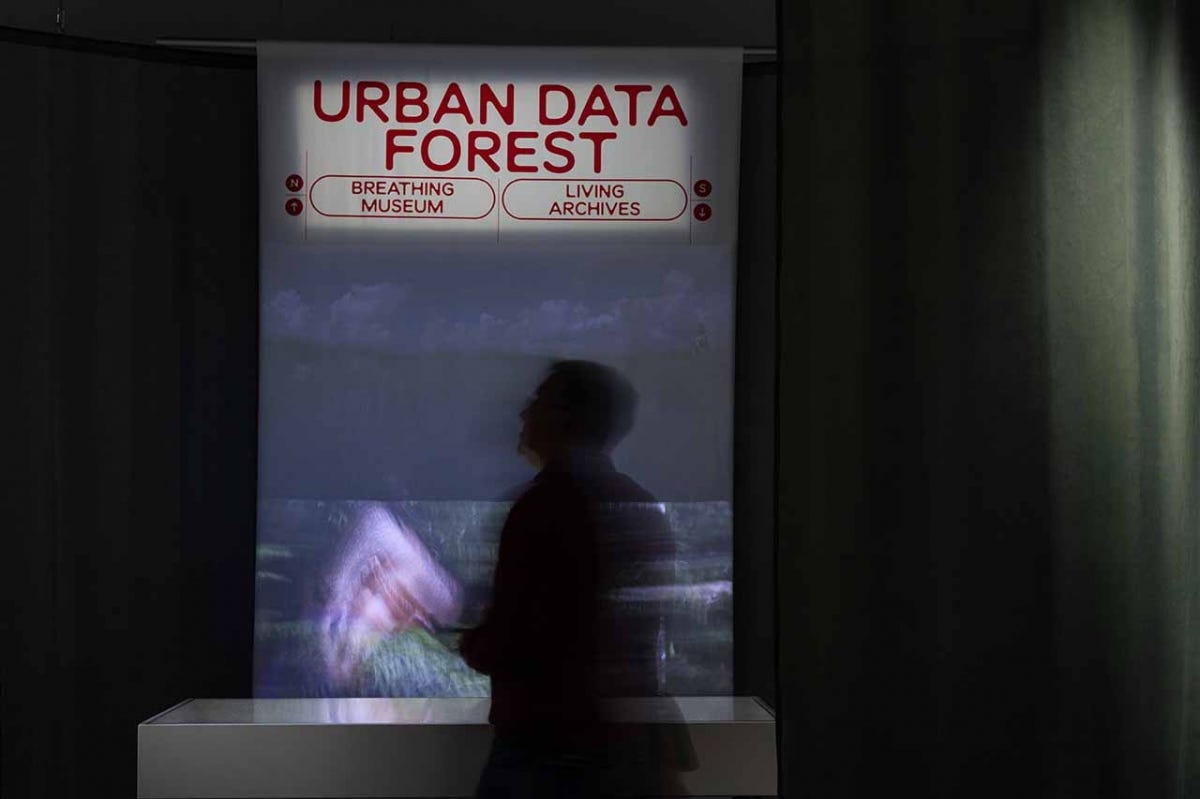
Welcome to the Urban Data Forest
Q: You also explored this idea in Urban Data Forest, where cities don’t just host trees for shade, but as biological archives. What does that world look like?
Monika: Imagine walking through a city where forests function as data banks. You plant a tree, and inside it, encoded into its DNA, is the history of your community, your family, or even lost knowledge that future generations will need. Instead of concrete data centers, we have botanical archives—breathing, growing repositories of civilization.
A tree that holds a library of extinct languages. A garden that preserves the genetic memory of ecosystems lost to climate change. A forest that, in its DNA, carries the blueprints for post-collapse recovery.
It shifts our entire relationship with data, memory, and preservation. Suddenly, nature is not just something to protect—it’s an active partner in the digital age.
Data, DNA, and the Coming Ethical Quagmire
Q: This is where things get very cyberpunk, but also a bit unsettling. If we’re encoding data into nature, aren’t we essentially hacking the biosphere?
Monika: That’s exactly the ethical tightrope we have to walk. Gene-editing for data storage means creating genetically modified organisms. This is why, in my Fellowship, I’m actively working with scientists to explore non-GMO methods. Could we encode digital data without altering DNA? Could we use epigenetics, biofilms, or biochemical markers instead?
We’re also thinking about governance—who owns this data? If I encode my memories into a tree, do I still “own” them? Could corporations patent and privatize living data carriers? Would we need bio-rights for plants and fungi?
These are very real futures we have to anticipate now.
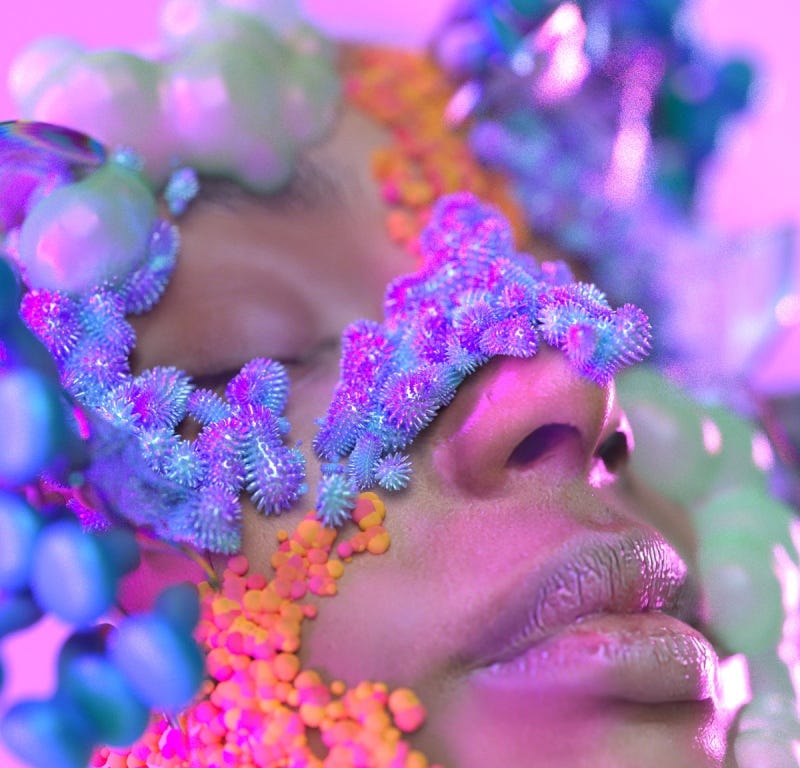
Interspecies Gossip: When Bacteria Start Talking
Q: This brings me to another of your projects—Interspecies Gossip. You imagined bacteria and butterflies as information couriers, carrying messages across urban environments. What was the spark behind that?
Monika: That project started during the pandemic when we were all obsessing over microbial threats. But microbes aren’t just pathogens—they are data processors, environmental sensors, and storytellers.
We imagined a world where bacteria act as gossip networks. Your sink’s microbiome might "whisper" about changes in your neighborhood’s water quality. A butterfly might carry climate data from one ecosystem to another. Imagine a biological internet, where information isn’t just stored in organisms, but actively flows through them.
This is already happening in nature. Trees communicate through mycorrhizal networks. Bacteria share genetic data through horizontal gene transfer. What if we could tap into that organic communication system rather than constantly building new digital infrastructures?
The Big Question: Are We Being Good Ancestors?
Q: This reminds me of something Jonas Salk once said: "Our greatest responsibility is to be good ancestors." Do you think we’re living up to that responsibility?
Monika: I think we’re trying. We’re in this paradoxical moment where we have more scientific knowledge than ever, but we also feel like we’re hurtling toward collapse.
But if we can shift our mindset—if we can move from extractive models to regenerative models—then yes, I think we have a chance. I believe the future isn’t about fighting entropy, but embracing syntropy—the principle that life organizes, heals, and regenerates.
It’s not about fearing technology or romanticizing nature. It’s about seeing them as one and the same.
Final Thought: A Visual for the Future
Q: If you had to describe a single image that captures the future, what would it be?
Monika: I see two competing images.
One is a lush, biodiverse landscape, teeming with life, where humans live as part of nature rather than apart from it. A world where forests are libraries, rivers are data streams, and fungi are fiber-optic networks.
The other is a vast, mechanized mining operation, stripping rare earth minerals from the ground to fuel the next generation of AI, automation, and surveillance.
The question is—which future do we choose?
Craving more?
📘 Alice in Futureland books
🎧 Alice in Futureland podcasts
Thanks for tuning in.
For more wanderings, become an Alice in Futureland subscriber—it's free.
Invite your friends to this mad tea party and let's see how many things we can learn before breakfast.
©2025 Alice in Futureland