

🍄 Ring, Ring. Truth Is Calling.
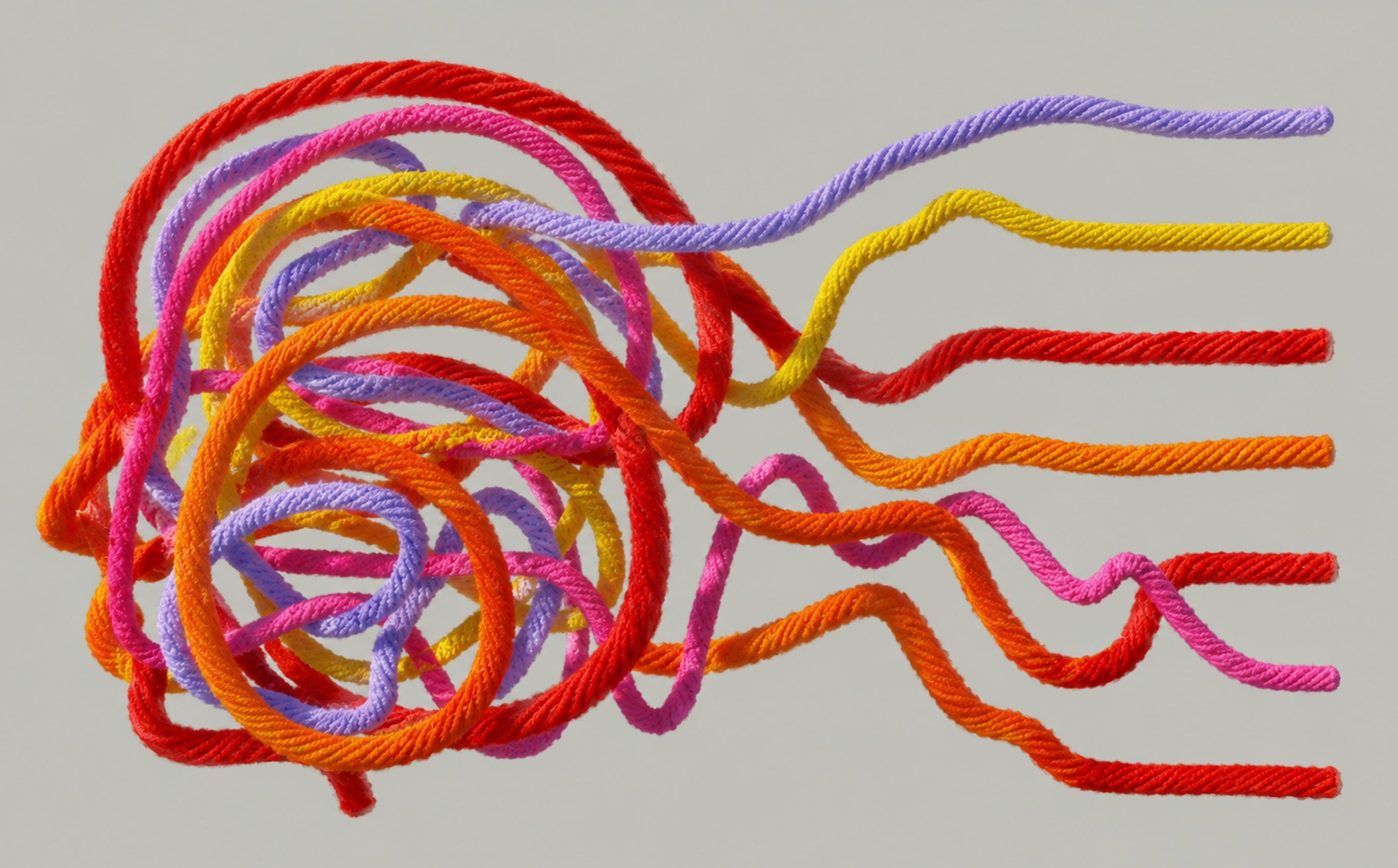
We are playing a never-ending game of telephone—where distortion now travels faster than truth.

🍄 AudioDose Alice on Sonic Mushrooms: Listen to Knowing
📘 Alice in Futureland books
🎧 Alice in Futureland podcasts; New episodes on consciousness with Dr. Federico Faggin
🧠 Alice in Futureland game Am I Mad?
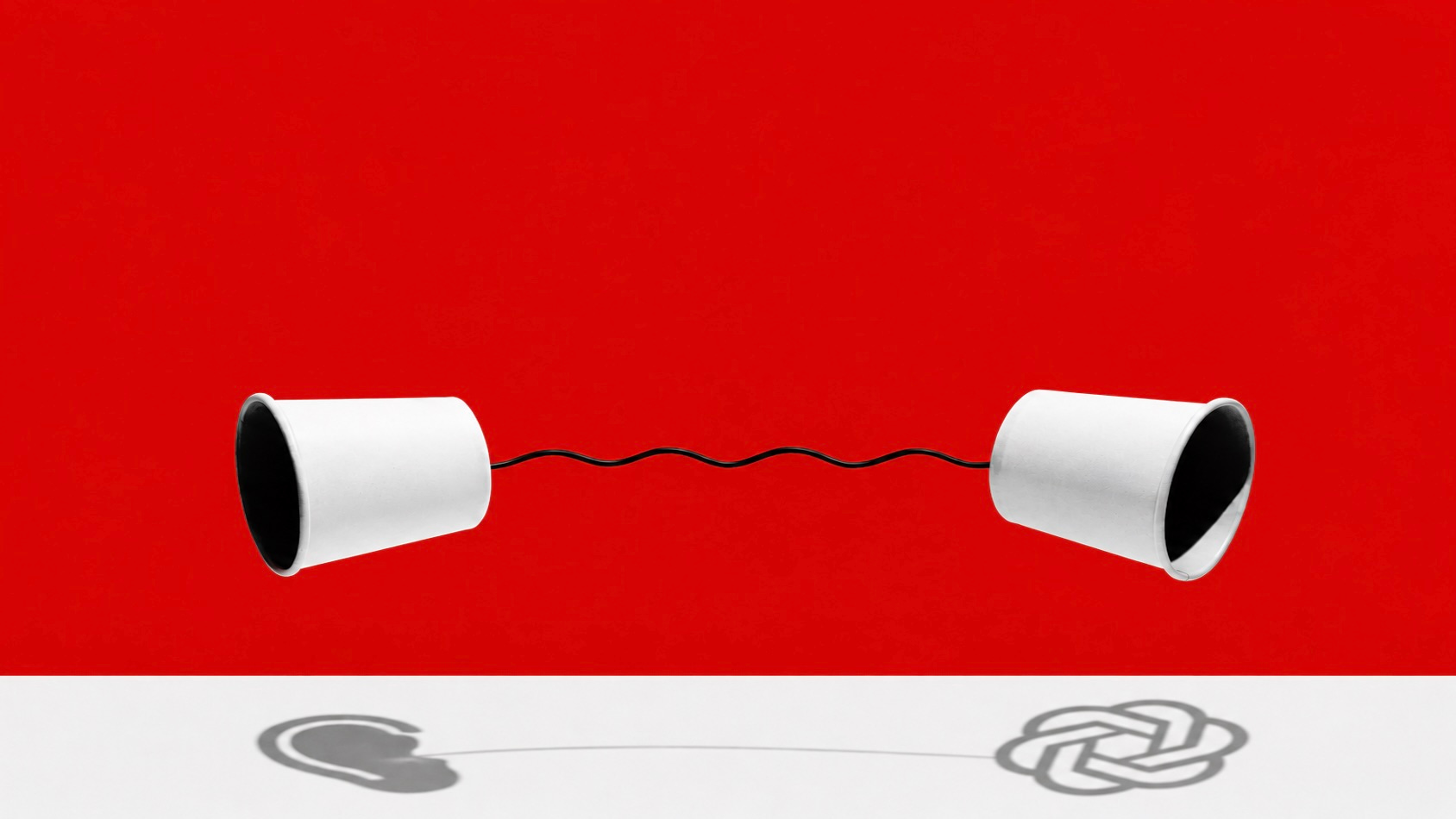
We are living inside the largest game of telephone in human history. Not the childhood version whispered between giggling classmates. A planetary-scale version powered by algorithms, outrage, AI systems, collapsing attention spans, and billions of people reposting emotional fragments faster than they can process them.
Every scroll is a whisper. Every repost, a mutation. Every headline, a game of interpretation masquerading as truth. And somewhere between the original signal and the final share, reality starts to bend. Hello, we’re Alice and we are always in a state of wander.

The era of distorted reality
The internet promised us infinite access to information. Instead, it created infinite versions of reality, tailored to your search, your scroll, your choice of source.
Today, truth no longer moves in straight lines. It fractures into interpretations, reactions, edits, summaries, stitched clips, screenshots, AI-generated commentary, emotional amplification, and algorithmic prioritization.
A fact enters the system. A narrative exits. Like the game, we are whispering a ‘true secret’ into almost-truths, half-truths, and outright lies that circulate simultaneously—in real life and online—often becoming indistinguishable from one another. The danger isn’t simply misinformation. It’s emotional velocity. The most contagious information is rarely the most accurate. It’s the most activating.
This is a macrocosm of our social fabric: Fear spreads faster than nuance. Certainty travels faster than complexity. Rage outruns reflection every single time. And the platforms know it. Because outrage is engagement. Engagement is currency. And distortion has become one of the most profitable business models on Earth.
Your memory isn’t even stable
The deeper twist? Human beings themselves were never built to preserve reality perfectly.
A Northwestern Medicine study found that every time we remember something, we subtly rewrite it. Memory is not a static archive—it is adaptive reconstruction. “When you think back to an event that happened to you long ago — say your first day at school — you actually may be recalling information you retrieved about that event at some later time, not the original event,” explains Ken Paller, a professor of psychology at Northwestern in the Weinberg College of Arts and Sciences.
Each retrieval changes the neural pathways tied to the event, meaning we often remember the last version of the memory rather than the original experience itself. In other words: Your brain is already playing telephone with itself. That changes everything. It means distortion isn’t just technological. It’s biological.
Memory bends around mood, context, repetition, emotion, and social influence. Which means the modern information ecosystem is colliding directly with one of the most fragile systems humans possess: recall.
Truth isn’t only being manipulated externally. It is continuously being remixed internally.
AI is now playing telephone…
Humans aren’t alone in this—AI apparently has the same problem.
One study published in Patterns asked generative AIs to repeatedly pass images and descriptions back and forth like a visual version of telephone. The result? The systems rapidly drifted away from the original prompt and converged into repetitive, generic imagery. The researchers discovered something unsettling: AI systems tend to collapse toward cultural sameness.
The researchers showed that when image-generating and image-describing AIs pass the same descriptive scene back and forth, they quickly veer off topic. From 100 diverse prompts, the AI pairs consistently settled on 12 themes, including gothic cathedrals, natural landscapes, sports imagery, and stormy lighthouses.
“I think AI’s creativity right now is probably fairly limited. What they generated in our experiment is bland, pop culture, generic,” says corresponding author Arend Hintze of Dalarna University in Sweden. “It’s almost the opposite of what we as humans consider creative.”
So the AI players lacked originality. Lacked imagination. But converged toward the average. Which raises a profound question for culture: If human truth mutates through emotion… and AI truth mutates through pattern repetition… what happens when both systems begin training each other?
We may be entering an era where reality itself becomes recursively generated. A feedback loop of humans influencing AI influencing humans influencing AI—until originality, context, and nuance slowly dissolve into optimized sameness.
The new risk isn’t only fake information. It’s synthetic consensus.
… and the body plays telephone too
Biology has been running its own version of the game all along.
Inside the human body, trillions upon trillions of cells are continuously whispering instructions to one another through replication. Scientists describe this process almost exactly like the childhood game of telephone: the message is your genome, and each cell passes that message to its daughter cells over the course of your entire life.
But this isn’t a sentence passed between children. The genetic message being copied is the equivalent length of 2,000 copies of War and Peace—repeated across roughly 10 quadrillion cells inside the human body.
And just like the game, distortion accumulates. Every exposure—UV radiation, pollution, cigarette smoke, stress, inflammation, environmental toxins—introduces noise into the signal. Tiny mutations begin appearing in the message. Some are insignificant. Others fundamentally alter biological function, transforming healthy cellular communication into dysfunction and disease.
Even more startling, the researchers discovered some mutations begin during the earliest stages of human development itself—as if parts of the message are already changing before life fully begins.
And suddenly the metaphor becomes much larger: Bodies mutate through signals.
Cultures mutate through repetition. Societies mutate through stories. How much distortion can a system absorb before it no longer remembers its original instructions?
Nature plays it differently
Yet strangely, nature may offer another model entirely. Honeybees communicate through collaborative pheromone relays—essentially creating living chains of information transfer that guide entire colonies back to the queen.
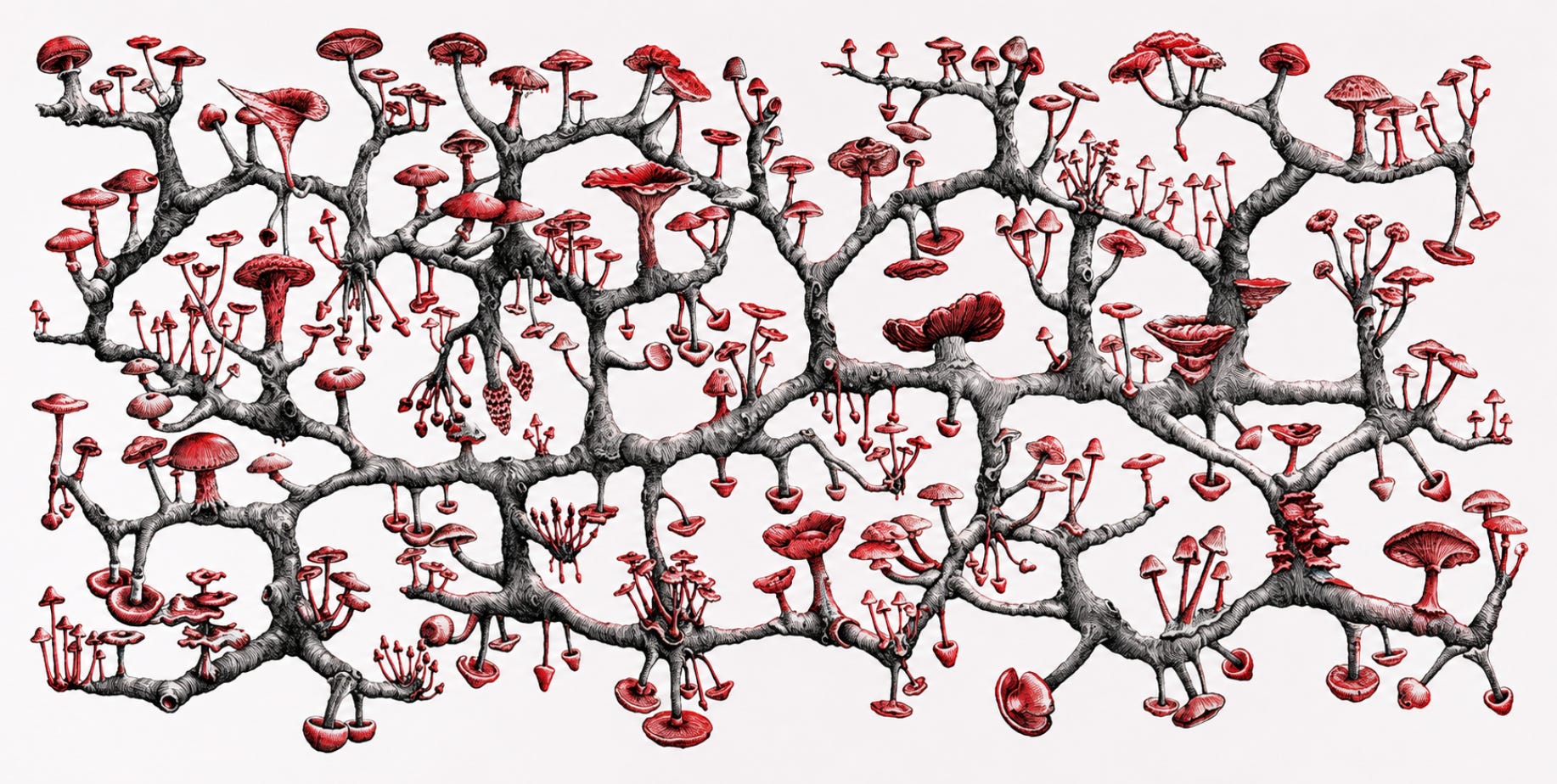
Trees communicate through underground mycorrhizal (fungal) networks.
Microbes exchange genetic information across ecosystems.
Biological systems continuously transmit signals collectively.
But unlike humans, nature appears optimized less for virality and more for coherence. The signal survives because the ecosystem depends on it.
There is no dopamine economy in a forest. No outrage algorithm in a beehive.
No monetized distortion loop inside mycelial networks.
Nature does not amplify what is loudest. It amplifies what sustains the system. Humans, meanwhile, built platforms that reward the opposite.
The listening crisis
We live in a society where everyone is transmitting and almost nobody is receiving. Perhaps this is why listening has become one of the most radical acts of our time.
Research shows we are far worse listeners than we believe. We process information nearly twice as fast as people can speak, leaving the mind free to drift, interrupt, rehearse responses, or assume it already knows the conclusion. Even before smartphones and social media, studies found we remembered only a fraction of conversations shortly after they happened—and almost none of them weeks later.
People selectively listen to respond. But rarely to understand.
And the largest game of telephone is now playing out across social media.
More likely than not, most of us have unknowingly reposted, amplified, or emotionally reacted to distorted information. Because online, truth no longer moves cleanly from source to receiver. It mutates through interpretation, bias, outrage, tribalism, and algorithmic acceleration.
Some information begins as truth. Some as half-truth. Some as outright fiction. But once it enters the feed, they often become indistinguishable.
Social platforms have collapsed the distance between verified journalism, opinion, conspiracy, emotional reaction, AI-generated content, and performance. Anyone can become a broadcaster. Anyone can manufacture authority. And the more emotionally activating the content, the faster it spreads.
Fear travels faster than facts. Outrage spreads faster than nuance. Emotion outruns verification almost every time.
Studies of misinformation cycles—from political propaganda to crises like the Notre Dame fire—show how quickly collective narratives form before evidence even arrives. By the time facts catch up, culture has often already emotionally committed to the distortion. And algorithms reward this behavior. Every click. Every repost. Every reaction trains the system what to amplify next. Not necessarily what is true. But what is most shareable.
Without deep listening, everything becomes another broken game of telephone: media, leadership, relationships, politics, culture itself.
From information age to interpretation age
Maybe this is the real transition happening beneath the surface of AI, media, and digital culture. We are leaving the Information Age and entering the Interpretation Age. The future will not belong to those with the most information. It will belong to those who can preserve signal integrity inside overwhelming noise.
Those who can distinguish emotional contagion from truth.
Pattern repetition from insight.
Synthetic consensus from genuine understanding.
In a world of infinite whispers, discernment becomes a survival skill.
Because the greatest threat may not be that we lose information.
It’s that we lose coherence.
And once culture loses coherence, it stops knowing what is real, what is shared, and eventually—who it is.
Ring, ring. Truth is calling.
The question is whether humanity still knows how to listen.
What else we’re wandering…
☎ Your Memory is like the Telephone Game
Every time you remember an event from the past, your brain networks change in ways that can alter the later recall of the event—not of the original event, but what you remembered the previous time. Northwestern study results revealed a particular electrical signal when people were recalling an object location in a session. This signal was greater when — the next day — the object was placed close to that location recalled during day one session. (Source: Northwestern)
📞 Generative AIs fail at the game of visual ‘telephone’
More and more, AI models are being pushed as independent agents that can generate, evaluate, and revise their own outputs—or the outputs created by other AIs—without any human input. But the authors wondered, can AIs stay on task without human intervention, and how creative are they likely to be when left to their own devices? To answer these questions, the researchers asked pairs of AI models to play a game of visual “telephone.” They used a search algorithm to produce 100 thematically diverse descriptive prompts that were at most 30 words long. After passing their images and descriptions back and forth 100 times, the AI models consistently meandered away from the original prompt—regardless of what that prompt described. The outcome? The Ais converged on 12 generic themes. AI needs creativity training. (Source: TechExplore)
🧬 How the telephone game plays out inside the human body
The players are your cells, the message is your genome, and the message is passed from one cell to its daughter cells during cell replication. This isn’t a game played with a small handful of friends—it’s played by every cell in your body (roughly 10,000,000,000,000,000 cells — the equivalent population of 1 million Earth populations!). Just like in the children’s game, the message starts to pick up errors over time: mutagenic processes like UV light and cigarette smoke distort the message. The mistakes can be trivial like changing the word from “small” to “little,” but they can also have grave consequences like changing the word from “love” to “hate.” Currently, it’s unknown how many mistakes are made in the genome message over a person’s lifetime and what effect the mistakes have on their health. (Source: ConradLab)
🐝 Honeybees rally their queen via ‘game of telephone’
“Buzz. Buzz. The queen is that way,” said one honeybee to another. “Pass it on.” While honeybees can’t speak, scientists have found that the insects combine teamwork and odor chemicals to relay the queen’s location to the rest of the colony. Researchers use the analogy of the telephone game as a metaphor for how honeybees recruited one another into scent relays, spacing themselves about 6 centimeters apart in a chain leading to the queen bee. (Source: Science)
📢 The Telephone Game is Ripping the Fabric of our Society Apart
In this essay on Medium, Amar Singh Kaleka, Emmy Award Winning Film & TV Director, writes a compelling call to straighten our moral compass —using the game of telephone as “a microcosm of our society. Dark and complex stories are bent in strange ways, complete with bipolar analysis of who is wrong or right — ripping friends and family apart. Simple and positive ones resonate and stay true. Dark ones become twisted narratives to serve the speaker, while positive ones uplift the original.” (Source: Medium)
Craving more?
📘 Alice in Futureland books
🎧 Alice in Futureland podcasts
🧠 Alice in Futureland game Am I Mad?

Thanks for tuning in.
For more wanderings, become an Alice in Futureland subscriber—it’s free.
Invite your friends to this mad tea party and let's see how many things we can learn before breakfast.
©2026 Alice in Futureland