

🍄 Otherworldly Communication
The message will be simple. Or impossible.
🍄 AudioDose Alice on Sonic Mushrooms: Listen to Citizens of the Solar System
📘 Alice in Futureland books
🎧 Alice in Futureland podcasts
🧠 Alice in Futureland game Am I Mad?
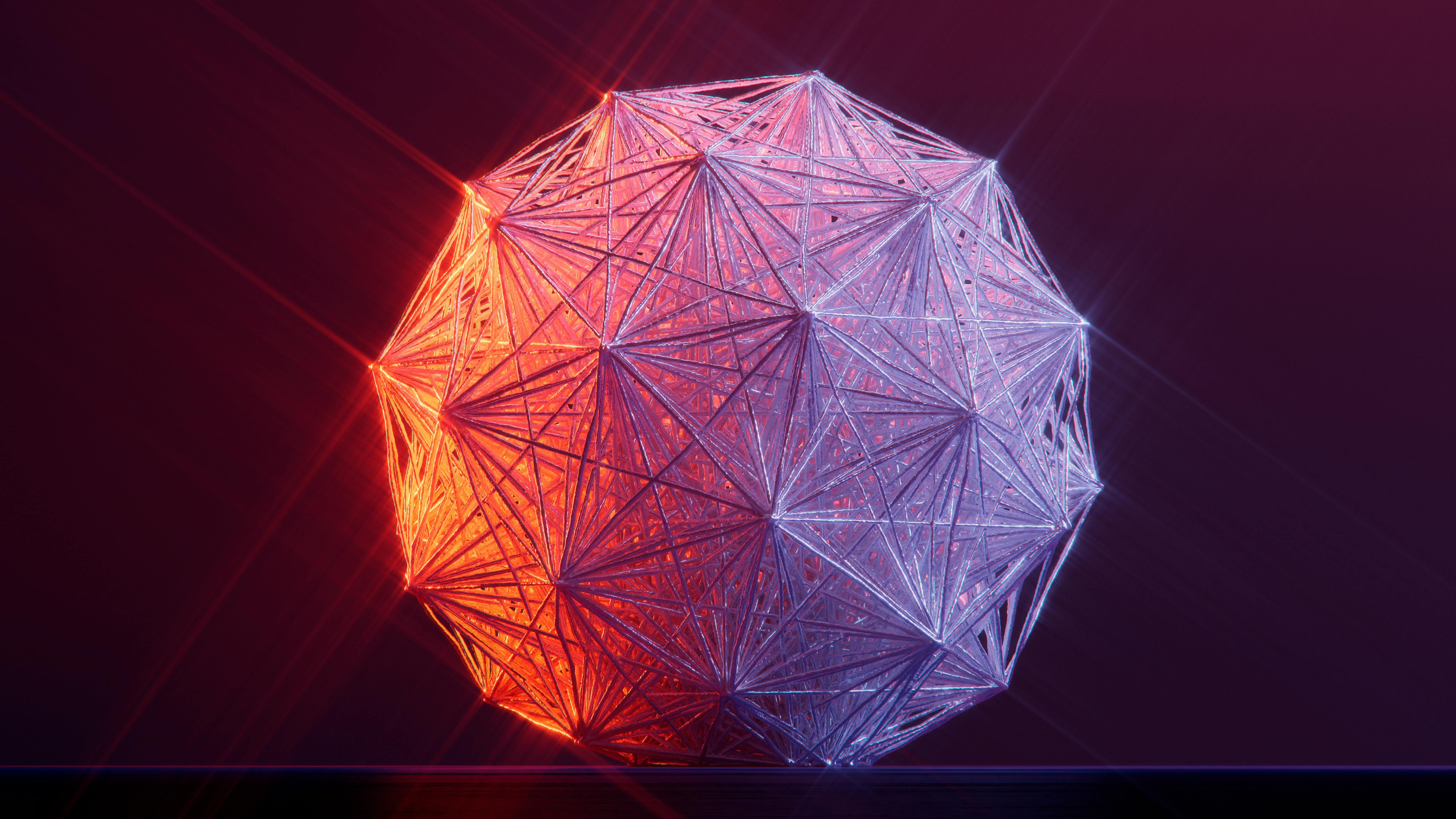
Here’s a short alien story: lightly grounded and probably not cleared for human understanding.
Mathematics was supposed to be finite—filed somewhere between Fermat’s Last Theorem and the last gasp of chalk dust. Then something flipped. Now people lean in. They whisper about chaos. They’ve heard of fractals. They suspect, correctly, that the universe is running code. That’s where this story begins.
First came the signal.
Not radio.
Not light.
Pattern.
Imagine a civilization that doesn’t count. Not because it can’t, but because counting is useless in a fluid universe. Suddenly, Earth’s obsession with rigid shapes and discrete numbers looks provincial. The pattern wasn’t trying to talk to us.
It was showing us how it thinks.
“We assume life must mirror us—carbon bodies, familiar brains, stable worlds—but those are sufficient conditions, not necessary ones. Could aliens be very different from us? Let’s speculate about magnetic aliens on the surface of stars. Now, for us to live on the surface of a star, not a chance. We’d burn up in an instant. Surfaces of stars are plasma. They are made of magnetic material. Let’s think about the mathematics that aliens like that would have. They are a magnetic creatures, they’re fluid creatures basically. Now our mathematics are based on counting things and on drawing triangles and so forth. But imagine these aliens, they start to draw a triangle and they put one point down and while they’re putting the second point, the first point’s moved away on the fluid flow. It’s like trying to draw on the surface of a river. They couldn’t draw triangles or count fixed objects, but might master vortices and fluid patterns in ways we barely grasp. Their mathematics would be coherent, yet nearly untranslatable to ours—two valid systems shaped by radically different realities. Thinking this way breaks the illusion that what we know is the only way to know.”—Ian Stewart, Mathematician, Science-Fiction Writer, Interview ALICE Library
And then someone asked the obvious question:
What if this isn’t a message from elsewhere? What if it’s a part of the universe we never noticed? A parallel mathematics. Compatible, but not identical. Like two operating systems running on the same hardware, occasionally intersecting, rarely translating.
Maybe intelligence isn’t rare. Maybe recognition is.
The pattern hasn’t stopped. It’s evolving. Or maybe we are. Either way, the old question: “Are we alone?” feels obsolete. The better question: How many versions of reality are we already living inside without noticing? And which one just noticed us back? Hello, we’re Alice and we are always in a state of wander.
The signal didn’t arrive. That’s the headline. That’s always the headline.
That’s the story. The absence, in this case, has started to feel less like silence and more like misrecognition. We’ve been calling it extraterrestrial, technological, external. But what if the phenomenon was never “out there” to begin with? What if it’s something we’ve been brushing against for centuries, encoded in myth, embedded in mathematics, flickering through our machines, waiting for us to become strange enough to finally notice it?
We live in an age where everything talks.
Your refrigerator negotiates with delivery systems, your wearable streams your heartbeat to distant servers, and your voice ricochets across global networks in milliseconds. Communication has accelerated into something close to omnipresence—fast, frictionless, and constant. And yet, against this backdrop of hyper-connection, the cosmos remains stubbornly mute. Or perhaps worse: it’s speaking in ways we don’t recognize as speech.
We’ve come a long way from smoke signals and drumbeats, from ink and paper and the slow intimacy of distance. The electric age rewired everything: telegraphs, telephones, satellites, until language itself dissolved into packets and pulses. Now we measure communication in latency and bandwidth, not meaning. But speed, it turns out, was the easy part. The real challenge has always been shared understanding.
You and I agree on what a word is, what a thing is, what it means for something to exist. That agreement is invisible, but it’s everything.
An alien intelligence might not share any of it.
We assume communication begins with signals: radio waves, broadcasts, noise. That’s been the guiding principle behind decades of searching. But what if that assumption is the problem? What if advanced civilizations don’t shout into the void, but whisper through it—using subtle, efficient patterns that barely disturb the cosmic background? Structured, intentional, but quiet enough to vanish if you’re not looking the right way. And even if we found such a signal, would we understand it?
Math is universal. Except when it isn’t.
We like to imagine the message will be simple. Mathematical. Universal. A clean sequence of primes, a diagram, a cosmic “hello.” But this assumes that mathematics itself is a shared language. That π is obvious. That counting is natural. That reality comes in discrete units. These ideas feel foundational to us, but they are also deeply human, rooted in our bodies, our perceptions, our ways of dividing the world. Modern approaches, like those inspired by algorithmic complexity, suggest we can brute-force possible structures, scanning for patterns that compress, that repeat, that hint at intention. The message, theoretically, contains its own geometry. But interpretation? That’s another abyss. Is it a body? A machine? A hoax?
The Arecibo Gambit was 1,679 bits of hope. In 1974, humanity fired a message into space: 1,679 bits, carefully arranged into an image. DNA. A human figure. A cosmic selfie. It assumed aliens would recognize prime numbers, reconstruct the grid, and decode the picture. That’s a lot of assumptions.
History offers a humbling reminder. We still struggle to decode ancient scripts from our own planet—languages created by minds not so different from ours. Context matters. Culture matters. Meaning isn’t just transmitted; it’s constructed. Even with advanced AI, patterns can be identified, but interpretation remains slippery, dependent on insight as much as computation. A message without context isn’t clarity—it’s ambiguity at scale.
Which brings us to one of the more unsettling possibilities: that the silence we perceive isn’t absence, but choice. The Fermi Paradox—why we haven’t encountered other civilizations—has inspired countless theories. One of the more compelling is the “inward turn.” Perhaps advanced societies don’t expand outward indefinitely. Perhaps they reach a point where the external universe becomes less interesting than the internal one. They build realities richer than planets, experiences deeper than exploration, and in doing so, they withdraw.
Not extinct. Not primitive. Just…complete. From the outside, they vanish.
And maybe we’ve misunderstood communication all along.
Not as a technological act, but as something more symbolic, more embedded. Ancient cultures, like the Maya, mapped time and consciousness in ways that feel alien even now, interweaving astronomy, psychology, and myth into a single system of meaning. It’s easy to dismiss the more speculative claims, but harder to ignore the possibility that communication might not always look like transmission. It might look like pattern. Like story. Like recurrence. Like something we’ve already archived under “folklore.”
“There is a medium in mathematics where you find something like the Mandlebrot set, which is a feature of the universe which is as real as Mt. Everest but that was previously invisible to us until we had something with which to essentially photograph that reality. And there are many other media that we will never know because we are too bound up, our perceptions are physically contained. But if you think about the RNA/DNA interchange, the arrangement of nucleotide along the DNA molecule, what’s important there is the agency that stacks those proteins in the order they are. The proteins are kind of irrelevant, it’s the pattern of information that is relevant. It’s the pattern. It’s the space between the 0’s and 1’s.”—John Perry Barlow, Co-founded EFF and the Freedom of the Press Foundation, ALICE Library
So imagine, for a moment, that contact does happen.
Not a greeting, not a conversation, but a structure, a signal that simply asserts: intelligence exists here. That’s when the real work begins. Decoding. Interpreting. Guessing at intent without feedback, without shared ground. Some theorists suggest messages might arrive in layers: first a beacon, then a key, then a framework for understanding. A slow unfolding. Assuming we’re patient enough. Or lucky enough.
“I asked myself, if I were a fish scientist and somebody grabbed me and lifted me into hyperspace, what would I see? If I was a fish lifted into the third dimension, I would see fantastic things. I would see beings that breathe without water, beings that move without fins. A new law of physics, that space itself has a different viscosity. A fantastic universe in the third dimension. And then if they placed me back in my pond, I would tell all the fish that I was lifted into the third dimension. And my friends would say, “Well, we saw you disappear, we saw you reappear, but we didn’t see any strange beings. There is no third dimension. You belong in an insane asylum.” Today, we physicists think that we are the fish. We spend all our lives in three dimensions: we go forward, backwards, left and right, up down, not realizing that there could be a whole universe outside ours. A universe maybe defined in 10-or-11-dimensional hyperspace.”—Michio Kaku, Theoretical Physicist and Science Writer, ALICE Library
In a way, the story has already turned inward.
We are no longer just searching for alien intelligence—we’re beginning to create it. Our machines generate language we don’t fully grasp. Our virtual environments blur the boundary between real and constructed. Communication is drifting away from the body, becoming more abstract, more autonomous.
We are, in small but accelerating ways, becoming alien to ourselves.
So maybe the first truly extraterrestrial signal won’t come from the stars. Maybe it will emerge from our own systems—something we built, but no longer fully understand. And when it speaks, it may not use words, or math, or anything we recognize as meaning. It might just blink. A brief flicker in the noise. And we’ll be left staring at it, wondering whether the universe has finally answered us—or whether we’ve simply learned how not to hear ourselves.
“I think there may be some chance that we will understand the basic physics governing our big bang and governing our space and time to answer the question of whether extra dimensions play an extra role in cosmos or micro-world, and whether there could be beyond the universe that we can observe other domains where extra dimensions are involved and manifest themselves. So, we may be able to get some insight into them. And of course, if we think ahead to possibilities of sort of virtual reality, we may be able to get a way of developing our intuitions and getting some feeling of what it might be like in a more complicated universe. But I think it won’t be direct experience, it will be a sort of vicarious, virtual reality experience, what we might have in the way we develop our intuitions. In fact, there are some people, like Roger Penrose for instance, who I think could already have a fairly good intuition of what it would be like in four of five dimensions. I think he’s someone with an amazing geometric intuition who can think in a geometrical way, in more dimensions than three. Most of us find that pretty hard. So I think we might be able to have aids to our imagination in a sense to understand what this would be like and to get some feel for what the potentiality it would be.” —Sir Martin John Rees, Cosmologist, Astrophysicist, ALICE Library
“I believe that in the relatively near future, we will see change as great as the rise in human kind within the animal kingdom. It’s very likely in the near future that the forms of futurology that have been used in the past will not be relevant because the comparison will be more like the comparison after an evolutionary change. I believe it is very likely, not certain, in the next 10-20 years there will be creations of people that are as much smarter than we are, as we are to that goldfish or to a chimpanzee.” —Vernor Vinge, Mathematician, Computer Scientist, Science Fiction Writer, ALICE Library
So imagine, for a moment, that contact does happen.
Not a greeting, not a conversation, but a structure—a signal that simply asserts: intelligence exists here. That’s when the real work begins: decoding, interpreting, inferring intent without feedback, without any shared ground. Some theorists suggest messages might arrive in layers—a beacon, then a key, then a framework for understanding—a slow unfolding.
But what if the message isn’t meant to be understood in the way we expect? What if it isn’t a bridge at all, but a demonstration, an existence proof of a mind so far beyond ours that comprehension becomes secondary to implication?
Not a dialogue, but a glimpse of what thinking can become. More unsettling still: what if what we’re seeing isn’t alien at all, but us—our future selves, or something we built, reaching back? Is it intelligence discovering us… or is it AI remembering us?
At that point, the question shifts. It’s no longer just what are they saying? but what kind of reality produces a mind capable of saying it—and could we become it?
“The amount of computation future robots will be able to do with a grain of sand is astronomical. In fact, I imagine that may be enough to stimulate everything that’s going on, on the surface of the Earth. To so much precision that it might as well be real. I think what might happen, we’ll get absorbed into their thoughts and continue their thoughts and continue their lives as simulations without ever knowing anything happened. Occasionally, they may think about us, because we’re their past, their ancestors certainly. If they do, their minds are so powerful, they’ll be able to recreate us in total detail, and when they think about us, they’ll bring us back to life. This very moment for instance... And this will happen here and there, eventually trillions of times. So what are the odds that this very moment we’re experiencing right now is the original or one of the quadrillions of recreations? This can’t be real.” —Hans Moravec, Robotics, Computer Scientist, ALICE Library
What else we’re wandering….
🎥 Disclosure Day: For more than 40 years, Steven Spielberg has been asking: what if we’re not alone? From the friendly alien at the heart of E.T. to the mysterious visitors in Close Encounters of the Third Kind, some of his most celebrated films have explored humanity’s fascination with life beyond Earth. His latest film Disclosure Day follows a meteorologist and a cybersecurity expert as they find themselves at the center of a movement to expose the government's cover-up of extraterrestrial secrets. Spielberg recently told the BBC that he believes we will discover aliens in our lifetime.
🧠 The Exo Institute is a forum for urgent discussion amongst leaders from all fields including science, business, religion and policy, on the emerging science paradigm. One that integrates consciousness and anomalous phenomena in developing a more complete understanding of the true nature of reality. A discussion to unlock new thinking to deliver solutions and action on global challenges and accelerate a Copernican-scale shift towards a better future for humanity. Source: Exo Institute
🧮 Do Aliens Speak Physics? explores whether math and physics are truly universal—or shaped by the human mind. It asks if advanced aliens would understand science the way we do, or perceive reality in completely different ways, and whether we could even communicate with them. Source: Do Aliens Speak Physics
📘 Assumptions: After Contact by Michael A.G. Michaud. After contact, many scientists have assumed alien messages would be designed to be easily understood—simple, clear, and even instructional, with advanced civilizations guiding us through decoding. But this optimism may be misplaced: communication across vast distances, without feedback, and between radically different minds could be far more difficult. What we interpret as language might not be language at all, and alien messages could be complex, symbolic, or even intentionally obscure. Source: Springer Nature
🧮 Could Advanced Civilizations Communicate like Fireflies? Humanity’s search for extraterrestrial intelligence (SETI), which began in the 1960s, has largely focused on detecting familiar technosignatures like radio signals, but this approach may be limited by human-centered assumptions. New research suggests expanding the search by studying diverse communication systems found in nature—such as firefly flashes—which are optimized to stand out while minimizing energy use. Source: Universe Today
🧠 The Inward Turn: Advanced Civilizations and the Fermi Paradox. The Fermi Paradox asks why we see no evidence of extraterrestrial civilizations despite the vast, life-friendly universe. One possible explanation is that advanced societies turn inward, immersing themselves in highly sophisticated virtual realities and evolving into post-biological, digital forms. Source: Medium
🧮 Here’s how we could begin decoding an alien message using math: Decoding an alien message may be possible using math by testing all possible ways a signal could be structured and identifying patterns that reveal its intended form. Inspired by the 1974 Arecibo message—whose meaning depends on arranging bits into dimensions based on prime numbers—researchers have developed a method that evaluates every possible configuration of a signal, scoring each for order and compressibility to find the most likely structure. Source: Science News
🧮 The Codes AI Can’t Crack: AI has made impressive strides in helping decode damaged ancient texts, but many writing systems remain unsolved due to limited data, unknown languages, and missing context. Tools like neural networks can identify patterns and assist scholars, yet true decipherment requires human intuition, cross-disciplinary knowledge, and archaeological evidence. Source: The Long Now
🧮 The Ancient Mayan Calendar: Gateway to Interstellar Consciousness. This article presents the idea that the ancient Maya possessed a form of “interstellar consciousness,” a worldview linking cosmic processes with human awareness. Through advanced astronomy, mathematics, and the Tzolkin calendar, they interpreted celestial movements as guiding forces for spiritual and intellectual development, embedding human life within a larger cosmic order. While some claims—such as knowledge from “Star Beings” or black holes transmitting consciousness—are speculative, the core theme emphasizes an expansive view of consciousness as interconnected with the universe, encouraging a shift from individual focus toward collective awareness and harmony with all life. Source: Medium
📘 Wonders in the Sky: by Jacques Vallée & Chris Aubeck “True science: to follow the data wherever they lead.” Rigorous scientific insistence allows Vallée and Aubeck to retain the most challenging and interesting aspects of encounter events without the distraction of premature commitment to any particular interpretation. A willingness to combine documentary research, the heart of humanities scholarship, with physical and astrophysical knowledge is rare. Source: Jacques Vallée

Craving more?
📘 Alice in Futureland books
🎧 Alice in Futureland podcasts
🧠 Alice in Futureland game Am I Mad?
Thanks for tuning in.
For more wanderings, become an Alice in Futureland subscriber—it's free.
Invite your friends to this mad tea party and let's see how many things we can learn before breakfast.
©2026 Alice in Futureland
As always, compelling and thought-provoking. I had a quick first read, will be back for a second more one. There’s so much to unpack here. Loving it!
Lovely piece. This idea of the “inward turn” has never crossed my mind previously. Gonna be chewing on that for a bit. As I’m reading the likes of Michael Singer and others on conscious awareness and what lies deep within, it makes a whole new level of sense. Thanks for another amazing read🙏