

🍄 Luck Hacking
Forget control. The 21st century belongs to those who engineer for serendipity.

🍄 AudioDose Alice on Sonic Mushrooms: Listen to Free Will
🎧 Alice podcasts
📘 Alice books
🧠 Alice in Futureland game of impossible possibilities, Am I Mad?
We’ve been sold the gospel of grit and merit. Work harder, hustle longer, and the universe will reward you. But here’s the heresy: our lives are rigged by randomness. From pandemics to AI disruption, from sudden wealth to freak accidents, it’s not effort but contingency that shapes destiny. To admit this is dangerous. It topples the mythology of meritocracy, rattles the hierarchies of power, and exposes the thin scaffolding between billionaires and the bankrupt.
But it’s also liberating!
Once we see luck as an ecology, a system that can be cultivated, hacked, and designed for, we can build futures less brittle, more humane, and far more inventive. Hello, we’re Alice and we are always in a state of wander.

We live in an age defined by volatility, pandemics that scramble societies, climate shocks that rewrite geographies, AI systems that upend work, economies that swing like metronomes on speed. In this turbulence, one ancient force has muscled its way back into relevance: luck.
Not the rabbit’s-foot superstition kind. Luck as cultural technology. Luck as a framework for navigating uncertainty. Luck as the inconvenient truth beneath the meritocratic lie we’ve been telling ourselves.
The death of the meritocracy myth
For decades, the Western narrative ran on a clean equation: hard work + talent = success. But the data tells another story. Sociologists, psychologists, even evolutionary biologists keep arriving at the same heretical conclusion: chance is the invisible architect of our lives.
Early breaks, random encounters, pure accident—these often set trajectories as powerfully as grit or genius. Sometimes survival means nothing more than not dying too soon, or stumbling upon the right ally, the right resource, the right opening.
Luck isn’t an aberration. It’s the hidden operating system of progress.
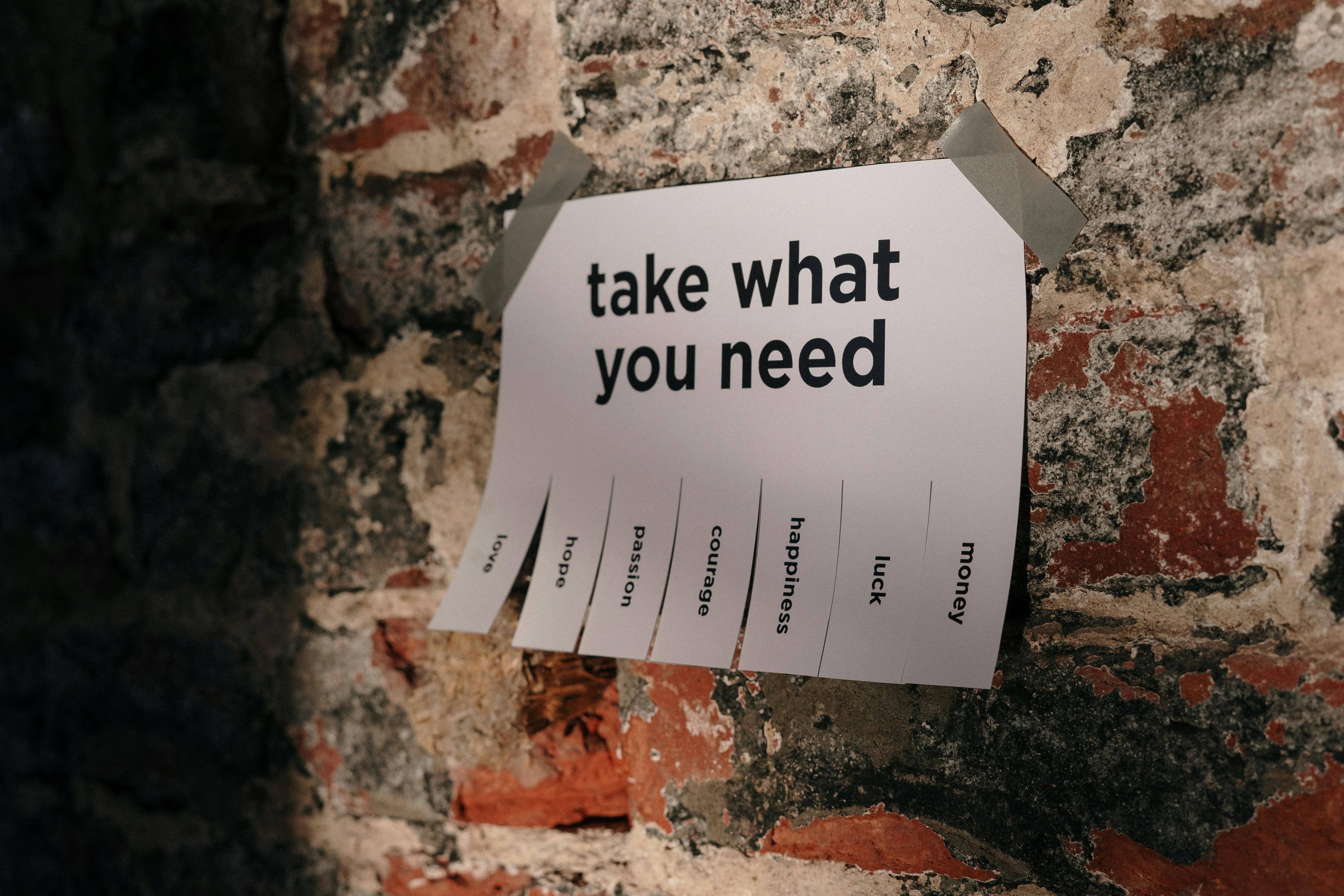
The sociology of luck: why naming it terrifies us
Michael Sauder argues sociology has tiptoed around luck for too long. Why? Because acknowledging it shatters the comforting illusion that inequality is deserved. To speak of luck is to admit that tornadoes, layoffs, illnesses, and accidents redraw lives on a whim. Luck is a redistributive resource—but one our cultural narratives bury. Naming it challenges the very foundations of merit, hierarchy, and reward.
Culture has always whispered what academia refused to say out loud. Tom Petty shrugged: Even the losers get lucky sometimes. Paul McCartney promised: With a little luck, we can help it out. Our language is saturated with luck because our lives are. It is the vernacular of contingency.
The science of luck: cultivation, not control
Folklore suspected it; neuroscience now confirms it: you can’t command luck, but you can hack the odds. Research shows that “lucky” people aren’t simply favored by fate—they stay open to opportunities, take risks, trust intuition, and reframe setbacks as stepping stones. A Stanford study on opportunity and innovation found that individuals who engage in exploratory thinking—who remain open to new experiences, connections, and ideas—are significantly more likely to stumble upon career-defining moments and breakthrough business opportunities.
So, how can you shift from waiting for luck to making it work for you? Here are three practical strategies:
Attentional Luck: Widen your networks and your perception. Serendipity lives in the periphery.
Reframing Luck: Bad breaks can become setups for better openings—if you choose to interpret them that way.
Multiplying Bets: Fortune doesn’t just favor the brave; it favors the prolific. Many small gambles trump one big one.
Luck, then, is less magic and more a design principle: openness, resilience, and a knack for spotting emerging patterns.
Nature’s luck: survival of the luckiest
Biology is just as rigged. Studies of birds, shrubs, and mice show that sheer randomness often beats superior traits. Evolution isn’t just “survival of the fittest.” It’s often “survival of the luckiest.” This should destabilize us. If chance governs nature as much as culture, then luck isn’t a glitch—it’s a planetary principle. Our systems, our policies, our innovations must be designed with luck, contingency, and serendipity in mind.
Why luck matters now: innovation in the age of volatility
Luck isn’t cute. It’s political. It’s economic. It’s innovative fuel.
Policy: Recognizing randomness makes us pro-safety-net. Anyone can fall unlucky.
Culture: Naming luck builds empathy and humility—qualities scarce in an age of polarization.
Innovation: The most transformative ideas emerge from environments primed for serendipity, not rigid plans. The future belongs to those who engineer for accident.
The call: designing for the unplanned
To reflect on luck is to reject the illusion of total control. It’s to understand ourselves as creatures of an ecology of chance—a web of randomness, agency, and resilience.
If we embrace this, we might design:
a culture that celebrates empathy and humility,
a science that learns to bow to uncertainty,
an innovation ecosystem that doesn’t just tolerate surprise but thrives on it.
Because randomness isn’t chaos. Randomness is the texture of life itself.
The future belongs not to the planners, but to the cultivators of luck.
The future will not be controlled.
The future will be hacked by chance.

What else we are wandering…
🤞 How Luck and Chance Shape Your Life: Life is shaped as much by chance as by choice. From the random way we stumble upon an article to the accidents of birth that determine our parents, names, and opportunities, Mark Robert Rank’s The Random Factor reminds us how profoundly luck and randomness influence our paths. History itself hinges on happenstance—Hitler rejected from art school, cloud cover sparing Kokura but dooming Nagasaki, or an asteroid wiping out dinosaurs and paving the way for humans. Recognizing this doesn’t diminish hard work or agency; instead, it deepens empathy, gratitude, and humility. By accepting the role of luck, we not only better understand our own lives but also build a stronger case for compassion, safety nets, and seizing serendipity when it appears.
🍀 Survival of the luckiest? New study hints at the potential role of luck in evolution: A Cornell study suggests evolution isn’t just about “survival of the fittest” but also “survival of the luckiest.” By raising genetically identical mice in equal environments, researchers found that small chance events—like winning an early scuffle—can snowball into major advantages, especially for males competing for territory and mates. The findings highlight how luck, amplified by competition, can shape evolutionary outcomes as much as genes or environment, and challenge the notion that success—whether in mice or humans—can be explained by merit alone.
🎲 It’s mostly luck, not pluck, that determines lifetime reproductive success: Cornell ecologists Stephen Ellner and Robin Snyder argue that lifetime reproductive success is driven less by superior traits and more by sheer luck. Using models and case studies of birds, shrubs, and grasses, they show that while individual differences matter, outcomes hinge on chance events—like early survival or rapid growth—that snowball into long-term advantages. Much like wealth inequality in humans, reproduction in nature is highly skewed, with a small fraction of individuals producing most offspring. Their findings challenge traditional ecological focus on traits, suggesting that “not dying”—or being lucky enough to survive early setbacks—is the true driver of evolutionary success.
🧠 The Role of Luck in Success: A Perspective on Hard Work, Progress, and Mindset: Success is shaped by both effort and luck, but mindset determines how we respond to chance events. Research shows that while personal effort matters, factors like being born into supportive environments, meeting the right mentor, or seizing unexpected opportunities can be just as critical. People who see themselves as “lucky” often create their own fortune by staying open to new experiences, resilient in setbacks, and attuned to opportunities. Cultivating a growth mindset—viewing abilities as developable and failures as lessons—helps transform chance into progress. In the end, luck may spark opportunities, but perspective and persistence decide whether we capitalize on them.
Craving more?
📘 Alice in Futureland books
🎧 Alice in Futureland podcasts
🧠 Alice in Futureland game Am I Mad?

Thanks for tuning in.
For more wanderings, become an Alice in Futureland subscriber—it's free.
Invite your friends to this mad tea party and let's see how many things we can learn before breakfast.
©2025 Alice in Futureland